
Types of Phone Cases: A Buyer’s Guide for Brands and Wholesalers
Table of Contents
- What Should Buyers Check Before Approving a Case Type?
- What Information Is Needed for an Accurate Quote?
- Frequently Asked Questions
- What are the main types of phone cases?
- Can one phone case belong to more than one type?
- Which type of phone case is best for a wholesale range?
- Are all of these phone case types available in stock?
- Can in-stock phone cases also be customized?
- Can these types support iPhone, Samsung and Google Pixel?
- What is the difference between a magnetic case and a MagSafe case?
- What is a blank sublimation phone case?
- Can every phone case type use the same logo process?
- What is the MOQ for different phone case types?
- Build the Right Phone Case Assortment for Your Market
Phone cases can be grouped by appearance, function, structure or decoration method. A clear case describes appearance. A magnetic case describes a charging or attachment feature. A wallet case describes a form and use case. A TPU + PC double-layer case describes structure. One product can belong to several groups at the same time.
That overlap matters to brand buyers. Asking only for “a magnetic case” does not define whether the case should be clear, soft-touch, wallet-style, kickstand-equipped or double-layered. The phone model, material structure, finish, features, artwork and packaging still need to be specified.
This guide compares ten common types of phone cases for wholesale and OEM/ODM sourcing. All of the categories covered here have in-stock options available through Lumei and may also be customized. Exact phone-model coverage, stock colors, customization method, MOQ and lead time are confirmed for each project.
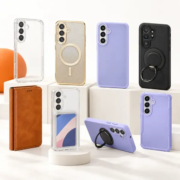
Quick Comparison of Phone Case Types
| Phone case type | Main selling point | Typical buyer use | Important checks |
|---|---|---|---|
| Clear case | Shows the phone or inserted artwork | Broad retail range, clean designs, custom printing | Clarity, scratches, long-term appearance, print area |
| Magnetic case | Magnetic charging and accessory connection | Feature-led ranges and charging ecosystems | Ring position, alignment, charging test, internal structure |
| Kickstand case | Hands-free viewing | Video, work, travel and utility ranges | Stand angle, hinge cycle, stability and closed profile |
| Trading card display case | Displays a collectible card | Fan, hobby, event and limited-edition collections | Card dimensions, insertion method, retention and visibility |
| Wallet or folio case | Phone protection plus card storage | Business, gift and practical-use collections | Card slots, fold, closure, inner holder and edge finishing |
| Double-layer protective case | Flexible and rigid components | Protective and feature-led ranges | Layer fit, bonding, corners, buttons and bulk |
| Matte or soft-touch case | Controlled hand feel and understated finish | Minimalist and color-led collections | Surface consistency, fingerprints, grip and color |
| Glitter or electroplated case | Decorative visual finish | Fashion, seasonal and trend-led collections | Finish consistency, edge wear, adhesion and color matching |
| Blank sublimation case | Printable blank surface | Print shops, personalization and on-demand decoration | Printable shell, material option, press setup and fit |
| Custom printed case | Brand artwork, pattern or campaign design | Private label, promotional and branded collections | Artwork method, color, registration, durability and MOQ |
How Are Phone Case Types Classified?
Phone case names are not controlled by one universal classification system. Suppliers, retailers and customers often use different labels for similar products. The most practical approach is to classify a case across four layers:
| Classification layer | Examples | What it tells the buyer |
|---|---|---|
| Appearance or finish | Clear, matte, soft-touch, glitter, electroplated | How the product looks and feels |
| Function | Magnetic, kickstand, card display, wallet | What the case allows the user to do |
| Structure | Flexible one-piece, folio, double-layer, rigid-back hybrid | How the components are built and assembled |
| Decoration route | Blank sublimation, UV artwork, heat transfer, silk screen, embossing | How the design or brand identity is applied |
A product description should combine these layers. “Clear magnetic TPU case,” “PU wallet case with a TPU inner holder,” and “TPU + PC kickstand case” are more useful sourcing descriptions than “protective case” alone.
10 Common Types of Phone Cases for Wholesale Buyers
1. Clear Phone Cases
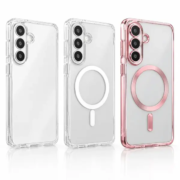
Clear cases are selected when the phone color, an inserted card or printed artwork should remain visible. They may use a flexible clear body, a clear rigid back, or a hybrid structure. Magnetic rings, electroplated edges, glitter, camera protection and printed designs may be added to suitable models.
For assortment planning, decide whether the product should be fully transparent, translucent, tinted or combined with colored edges. Buyers should inspect clarity, surface scratches, edge appearance, print adhesion and the visual effect after a phone is installed. Long-term color expectations must be discussed for the exact material and product rather than promised from a photograph.
Customization options include logos, UV artwork and magnetic structures. The final process and MOQ depend on the selected model, surface and artwork.
2. Magnetic Phone Cases
Magnetic phone cases integrate a magnetic ring or another magnetic structure for compatible charging and accessories. The outer style can still be clear, silicone, matte, wallet, kickstand, glitter or double-layered. “Magnetic” therefore describes one feature, not the entire product.
A buyer should verify ring position, magnetic strength, charging alignment, internal covering, surface flatness and compatibility with the intended phone and accessory. Test the finished decorated sample, because added layers, artwork or inserts can change the final distance between the phone and charger.
Magnetic cases can be customized with logos, patterns and, for suitable structures, integrated kickstands. Packaging should protect raised rings, stands and decorative surfaces during transport.
3. Kickstand Phone Cases
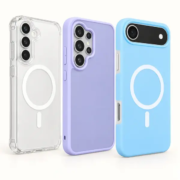
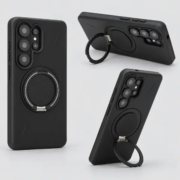
Kickstand cases support hands-free viewing for video, calls, work or travel. The stand may be built into a camera cover, ring, back panel or separate hinged component. Some stands also form part of the magnetic ring.
The important sourcing checks are not limited to whether the stand opens. Test portrait and landscape stability, usable viewing angles, hinge resistance, repeated opening, the closed profile and whether the stand interferes with charging or pocket use. Confirm that the camera-cover stand fully protects the lenses without blocking the camera.
Logo and artwork customization are available for suitable kickstand products, subject to the printable area and moving components.
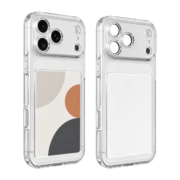
4. Trading Card Display Cases
Trading card display cases include a dedicated window, compartment or replaceable card area. They are useful for collectible, fan, event, hobby and limited-edition product lines. The case may display a standard card, an original brand insert or another approved printed card.
Buyers should define the card dimensions and thickness, insertion direction, retention method, visibility, moisture and dust exposure, and whether the card can be removed without taking off the complete case. The supplied or generated artwork must avoid unlicensed characters, teams, artists and customer brands.
Lumei has an in-stock iPhone 18 TPU card-display option. Logo, color and custom packaging can be arranged for suitable projects, with exact requirements confirmed during quotation.
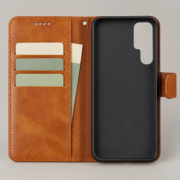
5. Wallet and Folio Cases
Wallet and folio cases add a front cover and may include card slots, a cash compartment, closure and viewing stand. The exterior may use PU leather or another textile-like surface, while the phone is held by a TPU or rigid inner shell.
For a wholesale range, compare storage capacity with overall thickness. Check the fold area, stitching or wrapped edges, card-slot dimensions, magnet closure, camera access, stand angle and the fit of the inner holder. A case that looks slim when empty may become bulky after cards are inserted.
Wallet cases can support logos, printed patterns, embossed marks, magnetic structures and custom packaging. Embossing visibility depends on the surface grain, color and logo detail.
6. Double-Layer Protective Cases
Double-layer cases combine components with different roles. A flexible TPU frame may wrap the phone while a more rigid PC panel controls shape, appearance or accessory mounting. Other double-layer constructions are possible, so the material and assembly method should always be written in the specification.
Inspect the fit between layers, corner geometry, button response, camera opening, hard-panel scratches and any separation points. More layers do not automatically guarantee better protection; the full design and production quality determine the final result.
UV artwork, heat transfer, silk-screen logos, magnetic structures and custom packaging are available for suitable TPU + PC projects.
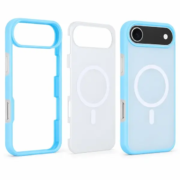
7. Matte and Soft-Touch Cases
Matte and soft-touch cases are selected for a restrained appearance and controlled hand feel. The effect may come from the base material, molded texture, surface coating or a combination of these. A translucent matte case and an opaque soft-touch case can look similar online but feel different in hand.
Approve the gloss level, color, texture, fingerprint visibility, grip and surface consistency under neutral lighting. Check high-contact areas around corners, buttons and camera edges. If a coating is used, the sample should be evaluated for adhesion and wear through the intended production test plan.
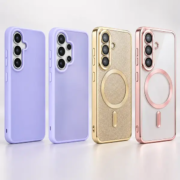
8. Glitter and Electroplated Cases
Glitter and electroplated cases create fashion-led visual effects. Glitter may be distributed through a clear or colored component, while electroplated details can emphasize the edge, camera opening or decorative frame. These finishes can also be combined with magnetic structures.
Buyers should compare glitter distribution, color consistency, edge coverage, visible seams, plating uniformity, adhesion and scratch sensitivity. Photography should show the actual finish under more than one lighting angle so wholesale customers understand the effect.
9. Blank Sublimation Phone Cases
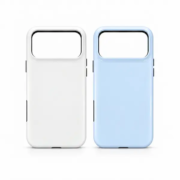
Blank sublimation cases are supplied with a printable outer shell for heat-sublimation decoration and a separate inner protective component. They are useful for print shops, personalization businesses and buyers who want to complete artwork locally or develop many small design variations.
Lumei’s blank sublimation program can use PBT, PC or a Korean PBT blend for the printable outer shell, with a TPU inner layer. These products are not automatically magnetic and must not be described as MagSafe unless a specific tested structure supports that claim.
Before ordering, confirm the printable area, shell material, surface preparation, press temperature and time recommended for the exact blank, compatible phone models, packaging method and whether a sample print has been approved. Logo and custom packaging options are available.
10. Custom Printed Phone Cases
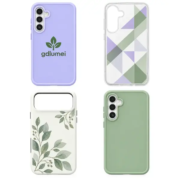
Custom printed cases turn a stock or existing-mold structure into a branded, promotional or design-led product. Depending on the case and surface, decoration may include UV artwork, heat transfer, silk screen, embossing or other project-specific processes.
The case type should be selected before the artwork method. A full-color design may need a different surface from a small one-color logo. Moving stands, card windows, camera openings, magnetic rings and textured areas reduce the usable print zone. Provide vector artwork or high-resolution files, target colors, print position and packaging requirements before sampling.
All of the case types in this guide may be supplied with custom packaging. Final process compatibility and MOQ are confirmed after reviewing the complete product and artwork.
Which Phone Case Types Should a Brand Stock?
A balanced range normally covers different customer needs instead of repeating the same function in many finishes. The exact mix depends on the sales channel, target price, customer profile and phone-model demand.
| Range objective | Useful starting types | Reason |
|---|---|---|
| Broad everyday range | Clear, magnetic, matte or soft-touch | Easy-to-understand functions and finishes across common models |
| Feature-led range | Magnetic, kickstand, double-layer | Creates visible functional differences between SKUs |
| Fashion or seasonal range | Glitter, electroplated, custom printed | Supports color, finish and artwork changes |
| Business or practical range | Wallet, folio, kickstand | Adds storage and hands-free viewing |
| Hobby or event range | Trading card display, custom printed | Supports collectible inserts and campaign artwork |
| Personalization or print-business range | Blank sublimation, custom printed | Allows many designs to use one approved case structure |
Start with a small number of structures and use color, artwork and model coverage to create depth. Too many unrelated case types can increase sample work, packaging variations and inventory complexity.
In-Stock vs. Customized Phone Case Types
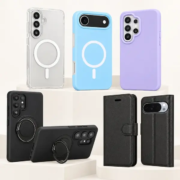
Lumei has in-stock options across all ten categories covered in this guide. Stock availability still needs to be checked by exact phone model, color and structure. An in-stock type can also be customized with suitable logos, artwork, colors, functions or packaging.
Selected in-stock phone cases may start from 50 units per order and may allow model and stock-color mixing under the confirmed combination rules. Custom processes can have separate minimums calculated by phone model, design, logo process, color or packaging design. Use the detailed MOQ guide for project planning and confirm the final quantity during quotation.
Customization Options by Phone Case Type
| Case type | Confirmed customization possibilities |
| Clear cases | Logo, UV artwork, magnetic structure and custom packaging |
| Magnetic cases | Logo, artwork, kickstand options and custom packaging |
| Kickstand cases | Logo, artwork and custom packaging |
| Wallet cases | Logo, printed pattern, embossing, magnetic structure and custom packaging |
| Trading card display cases | Logo, color and custom packaging |
| Blank sublimation cases | Logo and custom packaging; printable blank supplied for sublimation |
| Other types in this guide | Customization is available; exact process and MOQ confirmed according to the product |
Model support can be arranged for iPhone, Samsung and Google Pixel according to the specific project. This does not mean that every stock color and every structure is simultaneously available for every phone model. Confirm the model list before preparing artwork or retail packaging.
What Should Buyers Check Before Approving a Case Type?
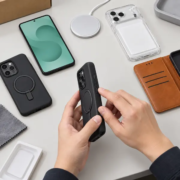
A useful sample review confirms both the general type and the exact execution. Use a physical phone or accurate fit model and record the approved sample with photographs and a written specification.
- Correct phone model, camera layout, port openings, speaker openings and button response.
- Complete material and layer structure, including inner holder, rigid panel, lining, stand and magnetic parts.
- Surface color, transparency, gloss, matte level, grain, glitter or electroplated finish.
- Functional checks for magnetic charging, kickstand stability, card retention, wallet closure and viewing angles.
- Logo or artwork size, position, color, registration, adhesion and appearance around edges and openings.
- Layer bonding, seams, wrapped edges, hinge points, corners and any detachable components.
- Packaging fit, barcode area, labeling, accessory protection and carton arrangement.
- Agreed reference sample, inspection standard and acceptable appearance limits for repeat orders.
What Information Is Needed for an Accurate Quote?
- Preferred phone case type or the customer need the product should solve.
- Phone models and estimated quantity by model.
- Required material or structure, if already decided.
- Stock colors or custom Pantone colors.
- Magnetic, kickstand, wallet, card-display or other functional requirements.
- Logo and artwork files, decoration position and preferred process if known.
- Retail packaging, barcode, labels and inner-pack requirements.
- Destination country and target delivery date.
If the buyer has not selected a case type, provide the target market, retail price, customer profile and required functions. Lumei can then recommend available structures and coordinate sampling, production, inspection and shipping with suitable manufacturing partners.
Frequently Asked Questions
What are the main types of phone cases?
Common types include clear, magnetic, kickstand, trading card display, wallet or folio, double-layer protective, matte or soft-touch, glitter or electroplated, blank sublimation and custom printed cases.
Can one phone case belong to more than one type?
Yes. A product may be a clear magnetic kickstand case, for example. Appearance, function, structure and decoration are separate classification layers.
Which type of phone case is best for a wholesale range?
There is no single best type. Clear and magnetic cases can support a broad everyday range; kickstand and wallet cases add functions; glitter and custom printed cases support fashion or campaign collections.
Are all of these phone case types available in stock?
Lumei has in-stock options across the categories in this guide. Exact model, color and quantity availability must be confirmed before ordering.
Can in-stock phone cases also be customized?
Yes. Suitable in-stock structures can be customized with logos, artwork, colors, magnetic features or packaging according to the product and project requirements.
Can these types support iPhone, Samsung and Google Pixel?
Model support can be arranged for iPhone, Samsung and Google Pixel according to the selected structure and project. Confirm the exact model list during quotation.
What is the difference between a magnetic case and a MagSafe case?
A magnetic case includes a magnetic structure, but product naming and compatibility claims should match the intended device and tested charging or accessory performance. Do not apply the MagSafe term automatically to every magnetic-looking product.
What is a blank sublimation phone case?
It is a case supplied with a printable outer shell designed for heat-sublimation decoration and an inner protective component. Material and press settings must be confirmed for the exact blank.
Can every phone case type use the same logo process?
No. The suitable process depends on the surface, shape, texture, moving parts, artwork and required quantity. Confirm the method through artwork review and sampling.
What is the MOQ for different phone case types?
MOQ depends on stock status, phone model, color, artwork, logo process, packaging and production arrangement. Selected in-stock orders may start from 50 units, while customized components can have separate minimums.
Build the Right Phone Case Assortment for Your Market
The strongest assortment is not the one with the most case types. It is the one that gives customers clear choices while keeping model coverage, inventory, artwork and packaging manageable. Define the customer need first, then approve the complete case structure and finished sample.
Lumei offers in-stock and customized phone case options across the categories in this guide and works with specialized manufacturing partners according to the model, structure, process, quantity and delivery requirements. Share your project details for a tailored product recommendation, MOQ review and quotation.

