
Phone Case Printing Methods: UV vs Heat Transfer and Other Options
Table of Contents
- Quick Comparison of Phone Case Printing Methods
- What Determines the Best Printing Method?
- UV Printing for Phone Cases
- Heat-Transfer Printing for Phone Cases
- UV Printing vs Heat Transfer: Which Should a Buyer Choose?
- Silk-Screen Printing for Logos and Spot Colors
- Sublimation for Printable Phone Case Blanks
- IMD and IML Phone Case Decoration
- Laser Engraving and Embossing Are Decoration Methods
- Which Methods Can Be Used on Different Phone Case Materials?
- How Artwork Moves from File to Approved Sample
- What Artwork Files Should the Buyer Provide?
- Reference MOQ for Different Decoration Methods
- How Should Printed Phone Case Samples Be Checked?
- Which Printing Method Fits Common Buyer Scenarios?
- What Information Is Needed for an Accurate Quote?
- Frequently Asked Questions
- What Is the Best Printing Method for Phone Cases?
- Can UV Printing Reproduce Photographs and Gradients?
- Can Heat Transfer Cover the Back and Edges of a Phone Case?
- What Is the Difference Between UV Printing and Heat Transfer?
- Is Sublimation the Same as Heat Transfer?
- Can Silk-Screen Printing Produce Multiple Colors?
- Can Transparent Phone Cases Be Printed?
- Can One Design Be Printed on iPhone, Samsung and Google Pixel Cases?
- How Long Does a Custom Printed Phone Case Sample Take?
- What Is the MOQ for Custom Phone Case Printing?
- Choose the Printing Route After the Product Is Defined
Phone case printing is not one universal process. UV printing, heat transfer, silk-screen printing, sublimation and in-mold decoration create artwork in different ways and suit different case surfaces, quantities and design goals. Laser engraving and embossing may also add a logo, but they are decoration methods rather than ink-printing processes.
For a brand buyer, the best method is the one that can reproduce the approved artwork on the selected case structure at the required quantity. A full-color photographic pattern, a small one-color logo and a blank case for local personalization should not automatically use the same process.
Lumei coordinates custom phone case printing through specialized manufacturing partners. Available options include UV artwork, heat transfer, silk-screen logos, sublimation, IMD/IML, laser engraving and embossing. The phone model, material, print area, artwork, quantity, packaging and required finish are reviewed before the method and MOQ are confirmed.
Quick Comparison of Phone Case Printing Methods
| Method | Typical strength | Common use | Important checks |
|---|---|---|---|
| UV printing | Full color, gradients, photographs and local artwork | Logos, patterns and campaign graphics on suitable finished cases | Surface compatibility, ink build, edges, white layer and adhesion |
| Heat transfer | Broad or full-cover color graphics | Patterns, gradients and photographic designs on suitable case structures | Coverage, edge transition, heat response, alignment and repeatability |
| Silk-screen printing | Direct spot-color printing | Simple logos, text and repeat brand marks | Ink color, screen count, registration, coverage and curing |
| Sublimation | Artwork transferred into a compatible coated printable shell | Blank cases, local personalization and many design variations | Exact shell material, coating, press settings and assembly |
| IMD / IML | Graphic layer integrated during molding | Repeat patterns and larger production programs | Film or label construction, mold fit, edges and approved sample |
| Laser engraving | Ink-free permanent-looking mark on suitable surfaces | Logos, text and restrained branding | Material response, contrast, depth and position |
| Embossing | Raised or recessed tactile mark | PU wallet and folio products | Surface grain, logo detail, pressure, position and visibility |
What Determines the Best Printing Method?
A printing method should be selected after the case structure and artwork are known. The same design can behave differently on flexible TPU, a rigid PC panel, a clear back, liquid silicone or a textured PU wallet surface.
| Decision factor | Questions for the buyer | Why it matters |
|---|---|---|
| Artwork | One color, multiple colors, gradient, photograph or repeating pattern? | Determines color separation, white ink, registration and process options |
| Coverage | Small logo, local graphic, back panel, edges or full wrap? | Openings, curves and moving parts reduce the usable decoration area |
| Case structure | One-piece TPU, clear hybrid, TPU + PC, silicone, PU wallet or printable shell? | The printable component and surface response are different |
| Quantity | How many units per model and per design? | Setup, films, screens, molds and production grouping influence MOQ |
| Finish | Flat, glossy, matte, tactile, raised or ink-free? | The desired appearance may favor one route over another |
| Use and packaging | Will the decorated area touch a charger, stand, card or retail insert? | Contact points can affect artwork placement and protection |
The final recommendation should be based on an actual product sample and production-feasible artwork, not on the method name alone.
UV Printing for Phone Cases
UV printing applies and cures ink directly on a prepared case surface. It can reproduce standard logos, multiple colors, photographs, gradients, local graphics and, on suitable structures, broad or full-surface artwork. A white underlayer may be used when color must remain visible on transparent or dark backgrounds.
Lumei can arrange UV artwork on suitable TPU, TPU + PC and transparent phone cases. The exact printable zone depends on the case geometry. Camera openings, magnetic rings, stands, texture, curved edges and flexible areas may require the artwork to stop, shift or be divided. Full coverage therefore remains subject to product and artwork review.
UV artwork may have a slight raised feel depending on ink build, white layers and finishing. Buyers should approve the surface feel, color, gloss, print edge and adhesion on the final case rather than judging only from a digital mockup.
As a general project reference, UV artwork may start from 50 units per phone model and per design. Final MOQ is confirmed according to the selected product, artwork coverage and production arrangement.
Heat-Transfer Printing for Phone Cases
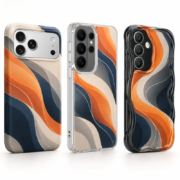
Heat-transfer printing uses heat and pressure to move a prepared graphic layer onto a compatible case surface or component. It can support colorful patterns, gradients, photographic artwork, back coverage and, for suitable structures, edge or wrap-style decoration.
Lumei can arrange heat-transfer artwork for suitable TPU and TPU + PC phone cases. Coverage around corners, camera openings, buttons and curved edges must be checked on the real structure. The artwork should include the required bleed and safe area, but the final production template should come from the approved product and supplier route.
Heat transfer should not be confused automatically with sublimation. The transfer materials, surface preparation and heat response can differ. The sample should confirm color, alignment, edge transitions, distortion around openings and the appearance after the case is flexed or assembled.
For selected heat-transfer projects, each phone-model-and-design combination may start from 10 units within a bulk order. The total order quantity and grouping are confirmed according to the selected case and production plan.
UV Printing vs Heat Transfer: Which Should a Buyer Choose?
| Buyer requirement | UV printing | Heat transfer |
|---|---|---|
| Small logo or local artwork | Often suitable | Possible, but may be unnecessary for a small mark |
| Photographs and gradients | Supported on suitable surfaces | Supported on suitable surfaces |
| Broad back artwork | Possible after surface and geometry review | Common use after template and edge review |
| Edge or wrap-style coverage | Depends strongly on the case and equipment route | Can be suitable when the structure and transfer route allow it |
| Slight raised print feel | Possible depending on ink build | Usually evaluated as a transferred surface layer |
| Low quantity by model/design | General reference: 50 per model and design | Selected combinations may start from 10 within a bulk order |
| Best proof | Finished decorated sample | Finished decorated sample |
Neither method is automatically better. UV printing may be efficient for a local full-color design and variable artwork on suitable cases. Heat transfer may be preferred when the design needs broader continuous coverage. Material, shape, quantity and the approved visual result decide the route.
Silk-Screen Printing for Logos and Spot Colors
Silk-screen printing transfers ink through a prepared screen. It is commonly selected for repeat logos, text and spot-color brand marks. One-color artwork is the simplest use, but multiple colors and larger artwork may also be possible when the case surface, registration and production setup allow them.
Every added color may require separate preparation and registration. Fine gradients and photographic artwork are normally better evaluated through full-color processes such as UV or heat transfer. Even when a complex silk-screen design is technically possible, the buyer should compare the sample quality, setup and quantity against other routes.
As a general reference, silk-screen logos may start from 200 units per phone model. Logo size, number of colors, ink, material, print position and production partner can change the confirmed requirement.
Sublimation for Printable Phone Case Blanks
Sublimation is useful when artwork will be applied to a compatible printable shell using a controlled heat-press process. Lumei can supply blank sublimation phone cases for customers that complete printing locally, or coordinate finished sublimation artwork for a project.
Lumei’s blank sublimation program may use PBT, PC or a Korean PBT blend for the printable outer shell with a TPU inner protective layer. The exact blank, coating and recommended press settings must be confirmed before production. A setting suitable for one shell should not be copied automatically to another material version.
A blank sublimation case is not automatically magnetic or MagSafe. Those terms should be used only when a specific magnetic structure has been supplied and tested. Buyers should approve the blank structure, printed sample, shell fit, camera alignment and assembled appearance.
IMD and IML Phone Case Decoration
IMD and IML integrate a printed film or label with a molded component instead of decorating only the completed outer surface. They can be useful for repeat patterns and larger programs where the buyer wants a consistent graphic layer built into the product construction.
Supplier terminology and layer construction can vary, so a buyer should not approve the project from the words IMD or IML alone. Confirm the printed film or label, protective layer, edge treatment, molded component, phone fit and final sample. Artwork changes may require new films, labels or setup.
Lumei can arrange IMD and IML phone cases for suitable projects. The applicable phone models, pattern, quantity, sample route and packaging are confirmed during quotation.
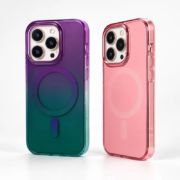
Laser Engraving and Embossing Are Decoration Methods
Laser engraving and embossing can create a brand mark without applying a conventional printed color layer. They are included in this guide because buyers often compare them with printed logos, but they should be described accurately as decoration or marking methods.
Laser Engraving
Laser engraving changes or removes the surface of a compatible material to create a mark. The visible contrast and depth depend on the exact material, coating and laser settings. A sample is necessary because the same artwork may appear darker, lighter or less visible on different finishes. A general project reference is 100 units per phone model.
Embossing
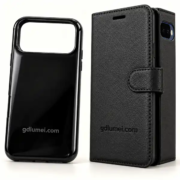
Embossing creates a raised or recessed logo by pressing the design into a suitable surface. It is especially useful for PU wallet and folio cases when a restrained tactile identity is preferred. Surface grain, padding, logo detail, pressure and color influence visibility. A general project reference is 100 units per phone model.
Which Methods Can Be Used on Different Phone Case Materials?
| Case or material | Confirmed project possibilities | What must still be checked |
|---|---|---|
| TPU cases | UV artwork and heat transfer | Surface treatment, flexibility, print zone, model and design |
| TPU + PC cases | UV artwork, heat transfer and silk-screen logo | Which component is decorated, layer assembly and magnetic parts |
| Transparent cases | UV artwork, logo and magnetic structures | White ink, transparency, back design and ring interference |
| Silicone cases | Silk-screen or other suitable logo route | Surface preparation, ink, logo detail and sample result |
| PU wallet / folio cases | Color printing, logo and embossing | Grain, fold areas, stitching, card slots and visibility |
| Printable sublimation cases | Local or supplier-coordinated sublimation | Shell material, coating, press settings and assembled fit |
| IMD / IML cases | Integrated fixed patterns | Film or label structure, mold/model availability and quantity |
These are confirmed capabilities, not a promise that every process fits every individual SKU. The exact phone model, color, case surface and production route still need a project review.
How Artwork Moves from File to Approved Sample
A reliable phone case printing project should move from a complete specification to artwork review, sample approval and controlled production. Skipping the finished sample creates avoidable risk around color, position and the usable print area.
| Step | Buyer and supplier action | Approval point |
|---|---|---|
| 1. Select the case | Confirm phone model, structure, material, color and function | Exact blank or stock structure approved |
| 2. Submit artwork | Provide vector logo or high-resolution graphics, target colors and placement | File quality and intended effect understood |
| 3. Review feasibility | Check process, print zone, openings, edges, moving parts and quantity | Method, template and reference MOQ agreed |
| 4. Prepare sample | Produce the decorated sample using the planned route | Color, position, coverage, feel and product function approved |
| 5. Mass production | Use the approved specification and reference sample | Production monitoring and inspection criteria recorded |
| 6. Pack and ship | Protect decorated surfaces and confirm retail packaging | Finished quantity, labeling and shipment approved |
What Artwork Files Should the Buyer Provide?
- Vector logo files such as AI, EPS, PDF or SVG when available.
- High-resolution raster artwork at the intended print size for photographs or complex graphics.
- Target Pantone, CMYK or approved reference colors when color matching matters.
- A placement mockup showing orientation, size and the intended visible area.
- Separate layers or color information if white ink, spot colors or multiple screens are required.
- Written approval for any licensed brand, customer logo, character or artwork supplied for production.
- Packaging artwork, barcode, labels and market-specific text as separate approved files.
A mockup communicates intent, but it is not the production template. The final template and safe area should be based on the exact phone case model and approved manufacturing route.
Reference MOQ for Different Decoration Methods
| Method | General project reference | Calculation basis or limitation |
|---|---|---|
| UV artwork | 50 units | Per phone model and per design |
| Heat transfer | 10 units per combination within a bulk order | Per phone model and per design; total order confirmed by project |
| Silk-screen logo | 200 units | General reference per phone model |
| Laser engraving | 100 units | General reference per phone model |
| Embossing | 100 units | General reference per phone model |
| Sublimation / IMD / IML | Project confirmation | Depends on blank, film/label, phone model, artwork and production route |
| Custom retail packaging | 500 units | Per packaging design; calculated separately from the case MOQ |
These figures are planning references, not universal commitments. Final MOQ is confirmed after reviewing the phone model, case structure, material, artwork, number of designs, color, decoration method, packaging and production arrangement.
How Should Printed Phone Case Samples Be Checked?
The approval sample should be checked as a complete product. A print that looks correct on an empty back panel may still conflict with a magnetic ring, stand, camera opening or packaging insert after assembly.
- Correct phone model, camera layout, ports, speaker openings and button response.
- Artwork size, orientation, position, safe area and alignment to the case edges.
- Color appearance under neutral lighting and comparison with the approved reference.
- White layer, opacity and transparency where artwork is printed on clear or dark cases.
- Registration between colors and sharpness of small logo details.
- Coverage and transition around corners, camera openings and curved edges.
- Surface feel, gloss or matte appearance and any raised ink or embossed effect.
- Adhesion and rub resistance according to the agreed project inspection method.
- Function after decoration, including magnetic charging, stands, card areas and wallet folds.
- Packaging contact points, protective film, dust control and presentation after transport.
Which Printing Method Fits Common Buyer Scenarios?
| Buyer scenario | Useful method to evaluate | Reason |
|---|---|---|
| Small multicolor brand artwork on an existing case | UV printing | Supports detailed color on suitable finished surfaces |
| Broad photographic or wrap-style pattern | Heat transfer | Can support wider continuous artwork on suitable structures |
| Repeat one-color or spot-color logo | Silk-screen printing | Direct repeat branding with controlled colors |
| Print shop completing many local designs | Blank sublimation case | One approved blank can support local personalization |
| Large repeat pattern integrated with the case component | IMD / IML | Graphic film or label is integrated during molding |
| Restrained mark without colored ink | Laser engraving | Creates a material-dependent mark |
| Tactile logo on a PU wallet case | Embossing | Creates a raised or recessed premium effect |
What Information Is Needed for an Accurate Quote?
- Phone models and quantity required for each model.
- Selected phone case or reference product, including material and structure.
- Stock color or custom color requirement.
- Artwork file, number of designs, target colors and required print coverage.
- Preferred printing or decoration method, if already known.
- Required sample, approval date and target delivery date.
- Retail packaging, label, barcode, inner-pack and carton requirements.
- Destination country and any market-specific artwork or labeling requirements.
If the buyer does not know the process, the visual goal is more useful than guessing a method. Send the case, artwork, quantity and required finish so Lumei can coordinate a suitable route with the selected manufacturing partner.
Frequently Asked Questions
What is the best printing method for phone cases?
There is no single best method. UV, heat transfer, silk screen, sublimation and IMD/IML suit different materials, artwork, coverage and quantities. Select the case first and approve a finished sample.
Can UV printing reproduce photographs and gradients?
Yes, UV printing can reproduce full-color photographs and gradients on suitable case surfaces. White ink, surface color, texture and print coverage must be reviewed for the exact product.
Can heat transfer cover the back and edges of a phone case?
It can cover the back and, for suitable structures, edges or wrap-style areas. Camera openings, curves, buttons and material response still need a product-specific template and sample.
What is the difference between UV printing and heat transfer?
UV printing cures ink directly on a prepared surface, while heat transfer moves a prepared graphic layer using heat and pressure. The suitable route depends on the surface, coverage, artwork and sample result.
Is sublimation the same as heat transfer?
Sublimation uses compatible inks, coatings and heat to produce artwork on a suitable printable shell. It is a heat-based transfer route, but it should not be treated as identical to every heat-transfer process.
Can silk-screen printing produce multiple colors?
Yes, multiple colors may be possible, but each color and registration step can add setup. Complex gradients or photographs may be better evaluated through UV or heat transfer.
Can transparent phone cases be printed?
Yes. Suitable transparent cases can use UV artwork or logos. White ink, opacity, transparency, magnetic rings and the phone color should be considered during design approval.
Can one design be printed on iPhone, Samsung and Google Pixel cases?
The same design concept can be adapted across supported models, but each camera layout and case shape requires its own placement review and may have a separate MOQ.
How long does a custom printed phone case sample take?
Custom samples generally require about 7–10 days, subject to the case, artwork, process and material availability. Sampling charges and shipping are confirmed by project.
What is the MOQ for custom phone case printing?
MOQ depends on the selected method and how it is calculated. UV may reference 50 units per model and design, while selected heat-transfer combinations may start from 10 within a bulk order. Other methods and packaging have separate requirements.
Choose the Printing Route After the Product Is Defined
A strong custom phone case project begins with the product structure, not the printing method name. Define the phone models, case material, artwork, coverage, quantity and required finish. Then compare feasible methods and approve the complete decorated sample.
Lumei supplies in-stock and customized phone case options and coordinates with specialized manufacturing partners according to the model, material, printing route, quantity, packaging and delivery requirements. Send the project details for a tailored process, sample and MOQ recommendation.

