
How to Choose a Wholesale Phone Case Supplier for Your Brand
Table of Contents
- What Should You Compare Before Choosing a Supplier?
- Supplier, Manufacturer or Sourcing Partner
- Start with Product and Phone Model Coverage
- Confirm the Customization Route on the Exact Case
- Ask How MOQ Is Calculated
- Approve a Finished Sample Before Mass Production
- Define Inspection Before the Order Is Produced
- Check Packaging and Label Support
- Confirm the Shipping Handover
- Look for Clear Project Coordination
- Common Supplier Warning Signs
- What Information Should You Send for an Accurate Quote?
- Frequently Asked Questions
- How do I choose a wholesale phone case supplier?
- Is a factory always better than a trading company or supplier?
- Can I mix phone models and colors in a wholesale order?
- What samples should I request?
- How long does a custom phone case sample take?
- Can the sample charge be refunded?
- What should be inspected before shipment?
- Can I arrange a third-party inspection?
- Can a supplier handle custom packaging and labels?
- Can Lumei arrange international shipping?
- What information does Lumei need for a quote?
- Choose the Supplier That Can Control the Whole Project
Choosing a wholesale phone case supplier is not only a price comparison. A useful supplier must be able to match the phone models, case materials, structures, artwork, quantity, packaging and delivery plan in the same project. A low unit price has little value if the sample is not approved, the model split is unclear or the finished packaging does not match the order.
For most brands, the safest starting point is a written product specification followed by a finished sample. Compare suppliers using the same information, ask how MOQ is calculated, confirm what will be inspected and decide who is responsible for coordinating production, packaging and shipment.
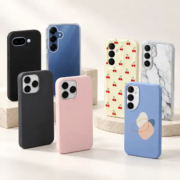
Lumei supplies in-stock and customized phone cases for supported iPhone, Samsung and Google Pixel models. Available categories include TPU, TPU + PC, silicone and PU products, as well as transparent, magnetic, stand, wallet and trading-card display structures. Lumei reviews each project and coordinates suitable manufacturing partners according to the product and process requirements.
What Should You Compare Before Choosing a Supplier?
| Area | Questions to ask | Useful evidence |
|---|---|---|
| Product range | Are the required models, materials and structures available? | Current product references, model list and stock status |
| Customization | Can the selected case support the required logo, artwork, color and packaging? | Comparable samples and a written process recommendation |
| MOQ | Is the minimum calculated by order, model, color, design or packaging design? | A quantity breakdown rather than one total number |
| Sampling | Will a finished custom sample be produced before mass production? | Sample photos or video and written approval record |
| Inspection | Which product, artwork, function and packaging points are checked? | Inspection checklist, photos and third-party inspection access |
| Delivery | Who coordinates packing, shipping and the buyer’s forwarder? | Packing plan and available express, air or sea route |
| Communication | Who owns changes, approvals and open questions? | One project specification and a clear contact person |
Supplier, Manufacturer or Sourcing Partner
The words supplier and manufacturer do not always describe the same business model. A specialized factory may be a strong choice when the project uses one product structure and one stable process. A supplier or sourcing partner may be more useful when an order combines several case structures, printing methods, packaging components or shipping arrangements.
The label alone does not prove quality. A buyer should ask who will produce each component, who approves samples, who monitors production and who resolves a mismatch between the case, logo and packaging. Transparent responsibility matters more than a broad claim that everything is made in one place.
Lumei works with specialized manufacturing partners and coordinates product selection, sampling, production monitoring, inspection, packaging and shipment. This model allows different products or processes to be combined under one project while the final production route remains specific to the selected case and customization.
Start with Product and Phone Model Coverage
A supplier may offer many phone cases but still lack the exact model, camera layout or structure that your project needs. Begin with a model list that shows the quantity for every iPhone, Samsung or Google Pixel version. Avoid descriptions such as “latest models” without exact names.
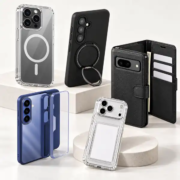
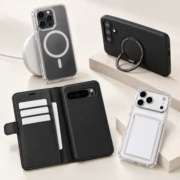
Lumei can provide both in-stock and customized phone cases. Supported options include TPU, TPU + PC, silicone and PU, with transparent, magnetic, stand, wallet and card-display structures available for suitable models. Stock availability and customization feasibility are checked against the actual project rather than assumed from a category name.
| Decision | Buyer input | Sourcing effect |
|---|---|---|
| Phone model | Exact model name and quantity | Camera openings, dimensions and available molds differ |
| Material | TPU, TPU + PC, silicone, PU or another confirmed construction | Feel, protection, print compatibility and cost differ |
| Structure | Clear, magnetic, stand, wallet, card display or another function | Components and functional checks differ |
| Availability | In-stock or custom production | Lead time, MOQ and color choices may change |
| Market | Destination and retail channel | Packaging, labels and documentation may differ |
Confirm the Customization Route on the Exact Case
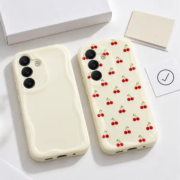
A supplier should not recommend a logo or print process before reviewing the case surface and artwork. The same UV design, heat-transfer pattern, silk-screen logo, custom color or embossed mark may require different preparation on TPU, a rigid PC panel, silicone or PU leather.
Ask for a recommendation that names the case, printable area, process, number of colors or designs, expected appearance and reference MOQ. Magnetic rings, stands, wallet folds, card windows, camera openings and textured areas may reduce the usable decoration zone.
Lumei can coordinate custom colors, logos, artwork and retail packaging for suitable products. Confirmed options include UV artwork, heat transfer, silk-screen printing, laser engraving, embossing and other product-specific routes. Final compatibility is confirmed after the exact product, artwork and quantity are reviewed.
Ask How MOQ Is Calculated
MOQ is often misunderstood because the total order quantity is not always the calculation basis. One minimum may apply to the whole stock order, while another applies separately to each phone model, design, custom color or packaging design. Ask the supplier to show the quantity breakdown before approving a quotation.
| Project type | General planning reference | Calculation basis |
|---|---|---|
| Selected in-stock cases | 50 units per order | Available models and stock colors may be mixed; minimum 10 per model-and-color combination |
| UV artwork | 50 units | Per phone model and per design |
| Selected heat-transfer projects | 10 units per combination within a bulk order | Per phone model and per design; total order confirmed by project |
| Silk-screen logo | 200 units | General reference per phone model |
| Laser engraving or embossing | 100 units | General reference per phone model |
| Custom retail packaging | 500 units | Per packaging design, calculated separately from the case MOQ |
| New mold | 2,000 units | Per newly developed phone model |
These figures are general project references, not universal promises for every product. Final MOQ depends on the selected phone case, phone model, material, stock status, color, artwork, finishing process, packaging and production arrangement.
Not sure which MOQ applies? Send the phone models, quantity, material, color, artwork and packaging requirements for a project-specific review. Button:
Approve a Finished Sample Before Mass Production
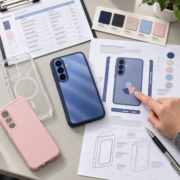
A digital mockup is useful for placement, but it does not prove the case fit, material feel, print color or function. The safer approval point is a physical sample made with the planned case structure and customization route.
Lumei can provide in-stock samples and custom samples before mass production. In-stock samples are charged at the applicable product price, with shipping paid by the customer. Custom samples can be made according to the buyer’s logo, artwork, color or packaging requirements and generally require 7–10 days, subject to the project.
Sample photos or video can be provided for review, but the buyer may still request physical delivery. The custom sampling charge may be credited toward a subsequent bulk order. Mass production is arranged after the approved sample and project specification are confirmed.
| Sample checkpoint | What to approve |
|---|---|
| Product | Phone model, case structure, material, color and surface finish |
| Fit | Camera opening, buttons, ports, speaker openings and installation |
| Artwork | Logo or pattern size, position, color, coverage and surface appearance |
| Function | Magnetic alignment, stand movement, wallet closure or card-display use |
| Packaging | Insert, barcode, labels, retail box, inner pack and presentation |
| Record | Approved sample version, written changes and final approval date |
Define Inspection Before the Order Is Produced
Quality control becomes clearer when the inspection points are agreed before production. The checklist should match the actual product. A magnetic case, wallet case, stand case and card-display case do not have the same functional checks.
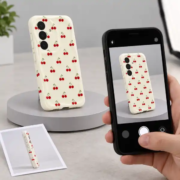
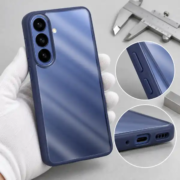
During production, Lumei can provide progress photos or video. Before shipment, checks can cover the finished quantity, phone model, camera opening, buttons, ports, installation fit, logo or artwork position and color, product function, packaging, labels and outer cartons. Pre-shipment product or packaging photos can also be provided.
Fit and Construction Checks
- Correct phone model, camera layout and case dimensions.
- Button response, port access, speaker openings and installation fit.
- Material surface, color and assembled layers against the approved sample.
- No obvious deformation, sharp edge, loose component or incorrect cutout.
Artwork and Functional Checks
- Logo or artwork position, orientation, size, color and print boundary.
- Magnetic attraction and alignment according to the agreed product design.
- Stand opening, closing and viewing position.
- Wallet folding, card-slot use and closure where applicable.
- Trading-card display area, insert access and product presentation.
Third-Party Inspection
A buyer may arrange an independent third-party inspection when the order value, customer requirement or risk level justifies it. The supplier should confirm the inspection stage, location, available documents, sampling plan and how any findings will be resolved before shipment. Lumei accepts customer-arranged third-party inspection for applicable orders.
Check Packaging and Label Support
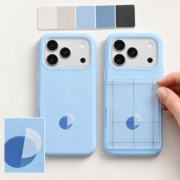
Packaging is a separate part of the project, not an automatic extension of the case MOQ. A supplier should confirm the retail packaging design, quantity, insert, barcode, labels, protective materials, packing method and outer carton before production.
Lumei can coordinate custom retail packaging, barcodes, labels and packaging stickers, and can pack products according to an agreed customer requirement. Custom retail packaging generally starts from 500 units per packaging design and is calculated separately from the phone case MOQ. Any unused packaging can be handled according to the confirmed project arrangement.
Ask for packaging photos before shipment and check that the phone model, color, quantity, label and carton marks match the approved packing list. If different models share similar boxes, the model identification must remain clear during packing and receipt.
Confirm the Shipping Handover
A quotation is incomplete if it does not explain the shipment destination and handover. The buyer should confirm the delivery term, packing dimensions, route, responsibility for freight and customs, required documents and the point at which the goods transfer to the buyer or nominated forwarder.
Lumei can arrange international express, air freight and sea freight, or deliver the goods to the customer’s appointed freight forwarder. The recommended route depends on shipment size, urgency, destination, product and packaging. Freight cost and transit time should be confirmed against the packed order rather than estimated only from the number of cases.
Look for Clear Project Coordination
A supplier should convert messages, artwork and price discussions into one controlled project specification. The document should identify every phone model and quantity, stock or custom color, case material, structure, logo or artwork version, customization route, packaging, sample approval and delivery requirement.
This is especially important when several partners are involved. One facility may specialize in the case, another in a decoration method and another in retail packaging. The buyer needs one party to coordinate compatibility, timing, approvals and shipment rather than receiving disconnected quotations.
Lumei can compare in-stock products with custom production, recommend suitable products and customization processes, coordinate different manufacturing partners, and manage the case, logo, packaging and shipping requirements within one order. Final quotations are prepared after the buyer submits the models, quantities, materials, colors, logos, artwork and packaging needs.
Common Supplier Warning Signs
| Warning sign | Why it creates risk | Better response |
|---|---|---|
| One MOQ for every product | Different models, designs and packaging may have separate minimums | Show the calculation basis for each line |
| A quotation without a model split | The total may hide unsupported or under-minimum combinations | List every model, color, design and quantity |
| No finished sample | Fit, color, position and function remain unverified | Approve the relevant physical sample before bulk production |
| Vague product names | “Silicone” or “magnetic” may describe different structures | Confirm the material layers and exact reference product |
| No inspection criteria | The buyer and supplier may judge quality differently | Agree fit, artwork, function and packaging checks |
| Unclear factory claims | The buyer cannot identify responsibility for different processes | Ask who makes, monitors and approves each part |
| Freight quoted without packing data | The final volume and route may change the cost | Confirm the packed order and shipping handover |
What Information Should You Send for an Accurate Quote?
- Exact phone models and quantity for each model.
- Preferred case material, structure or reference product link.
- Stock color or custom color requirement.
- Logo and artwork files, number of designs, target colors and placement.
- Preferred decoration method, if known, or the desired visual result.
- Required sample type and target approval date.
- Retail packaging, barcode, label, sticker, inner-pack and carton requirements.
- Target delivery date, destination country and preferred shipping route or forwarder.
- Any market-specific testing, labeling, compliance or third-party inspection requirement.
A complete inquiry allows the supplier to compare stock and custom routes, identify separate MOQ calculations and quote the sample, packaging and shipment more accurately.
Frequently Asked Questions
How do I choose a wholesale phone case supplier?
Compare the exact product range, model coverage, customization, MOQ calculation, sample process, inspection, packaging, shipping and project ownership. Use the same written specification for every supplier.
Is a factory always better than a trading company or supplier?
No. A specialized factory can be efficient for one stable product, while a supplier can be useful for orders that combine different products, processes and packaging. Evaluate transparency, samples, controls and responsibility rather than the label alone.
Can I mix phone models and colors in a wholesale order?
For selected in-stock products, an order may start from 50 units and mix available models and stock colors, with a minimum of 10 units per model-and-color combination. Custom projects follow their own calculation basis.
What samples should I request?
Request the exact product or a custom sample using the planned material, color, artwork and packaging. Approve fit, appearance, function and packaging before mass production.
How long does a custom phone case sample take?
A custom sample generally requires 7–10 days, subject to the case, customization process, artwork and material availability.
Can the sample charge be refunded?
The custom sampling charge may be credited toward a later bulk order. Shipping and the exact credit arrangement should be confirmed in the quotation.
What should be inspected before shipment?
Check quantity, phone model, camera opening, buttons, ports, fit, color, artwork, product functions, packaging, labels and cartons against the approved sample and specification.
Can I arrange a third-party inspection?
Yes. Lumei accepts customer-arranged third-party inspection for applicable orders. Confirm timing, scope, access and the response to findings before production.
Can a supplier handle custom packaging and labels?
Yes. Lumei can coordinate custom retail packaging, barcodes, labels and stickers. Packaging MOQ is calculated separately and final requirements are confirmed by project.
Can Lumei arrange international shipping?
Yes. Lumei can arrange express, air or sea shipment, or deliver the goods to the customer’s appointed freight forwarder. The route and quotation depend on the packed order and destination.
What information does Lumei need for a quote?
Send the phone models, quantities, case material or reference, colors, logo or artwork, packaging, delivery target and destination. Lumei can then compare stock and custom options and recommend a suitable route.
Choose the Supplier That Can Control the Whole Project
The best wholesale phone case supplier for your brand is the one that can explain the project clearly before production begins. Product references, samples, quantity breakdowns, inspection criteria, packaging details and shipping responsibility should all point to the same approved specification.
Lumei provides in-stock and customized phone case options and coordinates specialized manufacturing partners according to the model, material, structure, customization, quantity, packaging and delivery requirements. Send your project details for a tailored product, sample, MOQ and shipping recommendation.

