
Why Do Clear Phone Cases Turn Yellow? What Brand Buyers Should Know
Table of Contents
- Can Yellowing Be Prevented or Reversed?
- What Should an Anti-Yellowing Test Report Show?
- How Should Brand Buyers Approve a Clear Case Sample?
- What Should Be Checked During Bulk Production and Before Shipment?
- Which Clear Case Designs Can Reduce Appearance Risk?
- What Information Is Needed for a Clear Case Quote?
- Frequently Asked Questions
- Choose Evidence, Not an Absolute Yellowing Promise
Clear phone cases can turn yellow because transparent polymers and their additives change as they are exposed to ultraviolet light, oxygen, heat, moisture and everyday contact. Skin oils, cosmetics, fabric dyes and dirt can also make a case look yellow or brown. The exact result depends on the material chemistry, formulation, structure, use environment and time.
For a brand buyer, the useful question is not simply whether a clear case can yellow. It is how the selected TPU, PC or TPU + PC construction is specified, what anti-yellowing claim is being made, how the sample is evaluated and whether the finished bulk order is checked against the same reference.
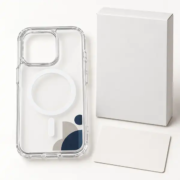
Lumei can provide clear TPU, clear TPU + PC and rigid PC-back products with TPU frames, including transparent, translucent, frosted, colored-clear, magnetic, stand and trading-card display structures for supported iPhone, Samsung and Google Pixel models. Material, testing, customization and packaging options are confirmed for the exact project.
What Does “Yellowing” Actually Mean?
Buyers often use one word for several different appearance problems. A useful inspection separates surface contamination, transferred color, coating change and polymer discoloration. The remedy and supplier responsibility are not the same for each condition.
| Appearance issue | Possible explanation | What to check |
|---|---|---|
| Loose dirt or oily film | Surface contamination from handling or the environment | Clean a defined area using the approved method and compare it with the untreated area |
| Localized stain | Dye transfer, cosmetics, ink or contact with another material | Record the location, contact history and whether the stain remains after cleaning |
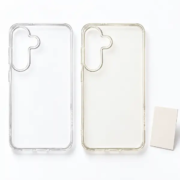
| Uniform yellow or amber tone | Change in the polymer, additives or coating after light, heat or oxidation exposure | Compare with an unexposed control sample under the same lighting |
| TPU edge changes before the back | Different materials or formulations are aging at different rates | Identify every layer rather than describing the whole case as one material |
| Haze or reduced clarity | Surface wear, micro-scratches, coating change or material aging | Inspect gloss, transparency and surface condition as separate attributes |
Cleaning can remove some surface dirt and transferred residue. It cannot be assumed to reverse chemical discoloration that has formed inside the polymer. This is why a before-and-after cleaning photo alone is not an anti-yellowing test.
Why Does Clear TPU Turn Yellow?
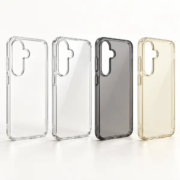
TPU is widely used for clear phone cases because it can form flexible edges, absorb impact, wrap around buttons and make installation easier. That flexibility does not determine color stability by itself. TPU is a family of formulations, and its response to light and heat depends on the polyurethane chemistry, stabilizers, pigments, processing and exposure.
Published polymer research shows that ultraviolet exposure can cause photo-oxidative reactions and visible color change in polyurethane materials. Accelerated UV-aging studies also report changes in TPU appearance, surface morphology, thermal behavior and mechanical properties. These studies explain the mechanism, but they do not predict the exact service life of every commercial phone case.
Anti-yellowing formulations may use a more suitable polymer system, UV absorbers, antioxidants or other stabilizing approaches. A surface coating may also slow staining, abrasion or exposure. The word “anti-yellowing” therefore describes a design objective, not a permanent guarantee.
Do All Clear Phone Cases Turn Yellow?
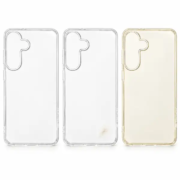
Not all clear cases change color at the same rate or in the same place. A case may use flexible TPU throughout, a rigid PC back with a TPU frame, several coatings, adhesives, a magnetic ring or decorative components. Each material can respond differently to light, heat and handling.
It is still unsafe to describe any clear case as permanently yellow-proof. Even rigid PC can experience color and optical changes during aging, and a hybrid case can remain clear on the back while the flexible edge changes first. Real use also varies widely by climate, sunlight, phone temperature, skin contact and cleaning habits.
Buyer rule. Treat “anti-yellowing,” “yellowing resistant” and laboratory hours as claims that require a defined test scope. Do not translate them automatically into a fixed number of months in real-world use.
TPU, PC and TPU + PC: How the Structure Changes the Risk
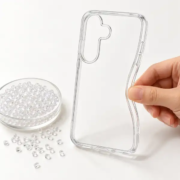
| Construction | Why brands choose it | Yellowing and appearance considerations | Buyer check |
|---|---|---|---|
| Clear TPU | Flexible, easy to install and suitable for integrated buttons and impact edges | The whole visible case uses a flexible polyurethane formulation, so changes may appear across the body and edges | Confirm resin formulation, additives or coating claim on the actual case |
| Clear PC | Rigid clarity and dimensional stability for a hard shell or back panel | PC is not automatically immune to UV, heat, scratches or optical change | Check the finished panel, coating and edge design under the intended test |
| TPU frame + PC back | Combines a flexible frame with a rigid clear back | The frame and back can age differently because they are different materials | Record each layer and inspect the assembled product, not only raw pellets |
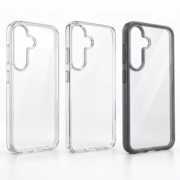
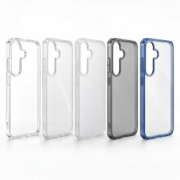
| Frosted or translucent | Reduces fingerprints and gives a softer visual effect | A lower-transparency appearance may make minor change less obvious but does not stop aging | Approve the initial haze, color and texture before testing |
| Colored transparent or smoke | Provides a deliberate tint and differentiates the product | The original tint can mask some visual change, but color consistency still matters | Use an approved color reference and agreed tolerance |
Which Factors Affect the Speed of Yellowing?
Material Chemistry and Stabilization
Two products described as clear TPU can use different polyurethane chemistry, stabilizer packages, recycled content, pigments, coatings and processing conditions. A supplier should identify the relevant material or finished-product specification rather than relying only on the word TPU.
Ultraviolet and Visible-Light Exposure
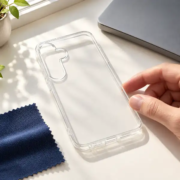
Sunlight and other light sources can initiate or accelerate photochemical change. Exposure depends on intensity, wavelength, duration, orientation and whether the product is behind glass. A test report should state the light source and exposure conditions.
Heat, Oxygen and Moisture
A phone case can experience heat from the device, charging, a vehicle or storage. Oxidation and thermal aging can affect color and other properties, while humidity and water cycles can change the result. Test conditions must therefore be compared with the intended market and use.
Skin Oils, Cosmetics and Dye Transfer
Daily contact adds oils, lotions, makeup, cleaning products and color from clothing or bags. These substances can create a removable film, a persistent stain or a surface interaction that looks different from uniform polymer yellowing.
Product Geometry and Manufacturing
Wall thickness, molding temperature, drying, storage, surface texture, coating coverage, adhesives and assembled components can influence the finished appearance. This is another reason to approve and test the finished case, not only a resin sample.
Can Yellowing Be Prevented or Reversed?
A brand can reduce risk, but it cannot promise that a clear polymer will remain unchanged forever. Material selection, stabilizers, coatings, controlled processing and appropriate storage can improve resistance. A darker transparent, frosted or colored-edge design can also make appearance changes less visible in the intended product style.
Cleaning helps when the problem is on the surface. Use only a method approved for the exact case and print because strong chemicals, abrasives or prolonged soaking can damage coatings, artwork, adhesives or surface gloss. If the polymer itself has changed color, cleaning may not restore the original clarity.
- Avoid an absolute “never turns yellow” statement on the product page or packaging.
- Do not promise a service life based only on one supplier phrase or one laboratory exposure number.
- Keep a protected approval sample as the starting reference for color and clarity.
- Define storage instructions for samples and finished stock so comparison pieces are not aged by uncontrolled light or heat.
- Treat cleaning guidance as product-specific and verify that it does not damage the selected print or coating.
What Should an Anti-Yellowing Test Report Show?
Lumei can coordinate anti-yellowing information, material documentation, UV aging, heat or environmental aging and before-and-after comparison images for applicable projects. The buyer should still review whether the report matches the exact product, material layer, color and acceptance requirement.
| Report item | Why it matters |
|---|---|
| Sample identification | Shows whether the specimen is raw material, a molded plaque, a component or the finished assembled case |
| Material and formulation reference | Connects the result to the resin, additives, coating and production version used for the order |
| Test method or laboratory procedure | Explains how light, heat, humidity or water exposure was controlled |
| Lamp type and exposure conditions | Hours alone are not comparable without irradiance, wavelength, temperature, moisture and cycles |
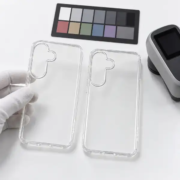
| Initial and final measurement | Provides a consistent color, yellowness, transparency or appearance comparison |
| Control sample | Allows the exposed specimen to be compared with the original state under the same viewing conditions |
| Acceptance criterion | Turns “anti-yellowing” into an agreed pass/fail or reporting requirement for the project |
| Report scope and date | Prevents a result for another material or old production version from being reused without review |
ISO 4892-3 describes fluorescent UV exposure of plastics using controlled UV radiation, heat and water. ISO 4582 addresses the evaluation of color and other property changes after natural or laboratory exposure. ASTM E313 provides a method for calculating yellowness and whiteness indices for near-white specimens. A buyer does not need to demand every standard for every order, but the chosen procedure and acceptance criteria should be named clearly.
How Should Brand Buyers Approve a Clear Case Sample?
The approval sample should use the planned phone model, material structure, color, magnetic component, stand or card-display function, artwork and coating. A generic clear shell does not validate a customized bulk product.
| Checkpoint | Record before mass production |
|---|---|
| Initial appearance | Clarity, tint, haze, gloss, texture, black points, bubbles and visible contamination |
| Material structure | TPU body, PC panel, TPU frame, coating, magnetic ring and any adhesive or decorative layer |
| Fit | Camera opening, buttons, ports, speaker openings and installation on the correct model |
| Artwork | UV design, silk-screen logo, heat-transfer pattern, location, coverage and color |
| Function | Magnetic alignment, stand operation or trading-card display access as applicable |
| Packaging | Retail box, insert, label, barcode, protective film and packing method |
| Color evidence | Controlled photos and, when required, an instrumental or laboratory record |
Custom samples generally require 7–10 days, subject to the product, material, artwork, test request and packaging. Sample photos or video can support remote confirmation, but a physical sample may still be needed when color, clarity, texture or fit is critical. Mass production should follow the approved sample and written specification.
What Should Be Checked During Bulk Production and Before Shipment?
Lumei can provide production progress photos or video and coordinate pre-shipment checks. Inspection can cover quantity, phone model, camera opening, buttons, ports, installation fit, transparency, initial color, black points, impurities, bubbles, artwork, function, packaging, labels and cartons. Customer-arranged third-party inspection is also accepted for applicable orders.
- Use the approved sample and written product specification as the inspection reference.
- Inspect multiple cartons and model combinations rather than one display sample.
- Separate acceptable designed tint from unintended color variation or contamination.
- Check TPU edges and rigid backs independently on hybrid products.
- Record lighting and camera conditions for comparison photos; do not judge color from unrelated phone screens.
- Confirm any accelerated-aging sampling plan before production because the test may require extra samples and time.
- Check custom packaging, barcode, labels, protective film and model identification before shipment.
Which Clear Case Designs Can Reduce Appearance Risk?
The right answer depends on the brand position. A fully transparent case gives maximum visibility but also makes small changes easy to notice. A frosted, translucent, smoke or colored-clear finish provides a different visual baseline. A rigid clear back with a replaceable visual focus, colored TPU frame, glitter, electroplating or original UV artwork can shift attention away from minor edge changes, but every decoration still needs compatibility testing.
Lumei can coordinate clear, translucent, frosted, smoke, colored-transparent, magnetic, stand and card-display products, as well as UV artwork, silk-screen logos, heat transfer, colored frames, glitter, electroplated effects and custom retail packaging for suitable cases. Final process compatibility and MOQ are confirmed after the exact model, artwork, quantity and packaging are reviewed.
What Information Is Needed for a Clear Case Quote?
- Exact iPhone, Samsung or Google Pixel models and quantity for each model.
- Preferred construction: clear TPU, clear PC, TPU frame + PC back, translucent, frosted or tinted.
- Required functions such as magnetic ring, stand or trading-card display.
- Stock color or custom color, including any colored frame or transparent tint.
- Logo, UV artwork, silk-screen or heat-transfer requirement and number of designs.
- Required anti-yellowing formulation, coating, material document or aging-test evidence.
- Sample requirement and target approval date.
- Custom packaging, barcode, label, sticker and carton requirements.
- Destination, target delivery date and any third-party inspection requirement.
These details allow Lumei to compare available stock products with custom production, recommend a suitable structure and process, and confirm the project-specific sample, MOQ, test, packaging and shipment arrangement.
Frequently Asked Questions
Why do clear phone cases turn yellow?
Clear polymers and their additives can change after exposure to ultraviolet light, oxygen, heat, moisture and use. Oils, cosmetics, dirt and dye transfer can also create a yellow or brown appearance.
Do all clear phone cases turn yellow?
Not at the same rate or in the same way. Material chemistry, stabilizers, coatings, structure and exposure differ. No responsible supplier should promise that every clear case will remain unchanged forever.
Does TPU yellow faster than PC?
Flexible clear TPU is commonly associated with visible yellowing, but the result depends on its formulation and exposure. PC can also experience optical and color changes. Compare the exact finished structures rather than only the material names.
Can a TPU + PC case yellow only around the edge?
Yes. The flexible TPU frame and rigid PC back are different materials and may age differently. The edge can change before the back, or the parts may develop different haze, tint or surface wear.
Can cleaning make a yellow clear case transparent again?
Cleaning may remove surface oils, dirt and some transferred residue. It may not reverse chemical discoloration inside the polymer, and aggressive cleaning can damage coatings, prints or gloss.
What does anti-yellowing mean?
It usually means the material, additive package, coating or design is intended to improve resistance. The claim is only meaningful when the product, test method, conditions, result and acceptance criterion are identified.
How should I compare anti-yellowing test reports?
Check the sample identity, material, formulation, test method, lamp, irradiance, temperature, humidity or water cycle, duration, color measurement, control sample and pass criterion. Exposure hours alone are not enough.
Can Lumei provide anti-yellowing tests or reports?
Lumei can coordinate anti-yellowing material information, UV aging, heat or environmental aging, test reports and before-and-after images for applicable projects. The exact scope, laboratory, timing and cost are confirmed for the selected case.
Can clear phone cases be customized?
Yes. Suitable clear cases can support UV artwork, silk-screen logos, heat transfer, magnetic structures, colored frames, frosted or translucent effects, glitter, electroplating and custom retail packaging.
How long does a custom clear case sample take?
A custom sample generally requires 7–10 days, subject to the product, artwork, material, coating, test and packaging requirements.
Which phone models can Lumei support?
Available and custom clear-case projects can support suitable iPhone, Samsung and Google Pixel models. Exact model availability is confirmed during quotation.
Choose Evidence, Not an Absolute Yellowing Promise
A responsible clear-case specification does not depend on one marketing phrase. It identifies the material layers, expected appearance, approved sample, exposure or test conditions, measurement method, acceptance criteria and inspection plan. That information gives a brand a repeatable basis for comparing suppliers and managing customer expectations.
Lumei supplies clear TPU, TPU + PC and PC-back case options and coordinates specialized manufacturing and testing partners according to the model, structure, customization, quantity, evidence, packaging and delivery requirements. Send the project details to receive a suitable product, sample and validation recommendation.

