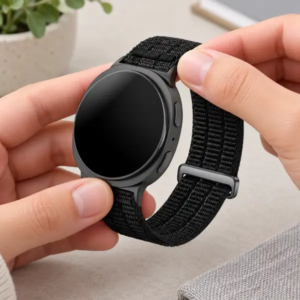
Different Types of Watch Bands: A Guide for Brands and Retailers
Table of Contents
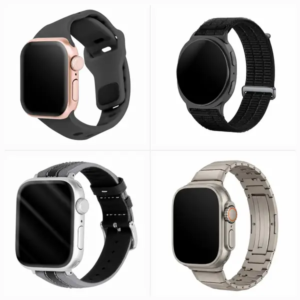
The main types of watch bands include silicone sport bands, nylon woven bands and loops, leather and PU straps, metal link bracelets, Milanese mesh bands, and elastic or scrunchie styles. Buyers can also distinguish them by closure, adjustment method and connection to the watch. These categories overlap: a nylon band can use a buckle or hook-and-loop fastening, while a metal band can use links or mesh.
For brands and retailers, these distinctions help define a range that customers can understand. Two bands with a similar color may differ in fit, adjustment and device compatibility. A clear product specification should therefore identify the material, construction, closure and exact connector before colors or branding are approved.
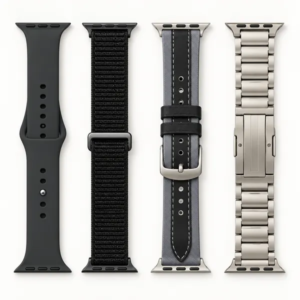
How Are Watch Bands Classified
“Silicone,” “magnetic” and “Apple Watch compatible” describe different parts of a product. Silicone identifies a material. Magnetic usually describes a fastening method. Compatibility identifies the device connection and fit. Listing them as interchangeable categories makes comparison difficult and can lead to an incomplete purchase specification.
| Classification | What it describes | Example |
|---|---|---|
| Material | The substance or material combination used in the band | Silicone, nylon, leather, PU or specified metal |
| Construction | How the band body is formed | Two-piece strap, woven loop, link bracelet or mesh |
| Closure and adjustment | How the band closes and fits the wrist | Pin buckle, folding clasp, hook-and-loop or elastic loop |
| Device connection | How the band attaches to the watch | Spring bar, quick-release pin or dedicated connector |
A useful specification might read “two-piece nylon band with a pin buckle and a quick-release connector for the confirmed device.” This gives a supplier much more information than “nylon sport strap.” Use the exact product specification to confirm the fiber composition, hardware and fit.
Common Watch Band Styles
Silicone Sport Bands and Perforated Bands
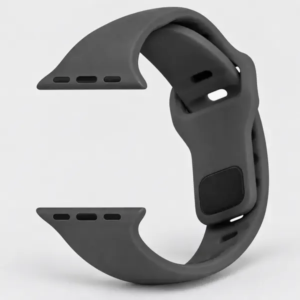
Silicone sport bands commonly use a molded body, adjustment holes and a buckle or stud-style fastening. Solid designs provide an uninterrupted surface, while perforated versions use additional openings as a visible construction feature. The number, location and shape of these holes should be checked on the actual sample rather than assumed from the style name.
For a wholesale range, compare the strap thickness, usable adjustment positions, edge finish, keeper and connector. These features affect how the finished product fits and operates. A sport appearance alone does not establish that a band is suitable for every workout, water activity or sensitive skin requirement.
Lumei product example: silicone sport watch band. Confirm the exact device version, available colors and closure before ordering.
Nylon Woven Bands and Adjustable Loops
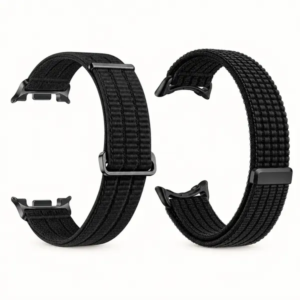
Nylon bands are available in several constructions, including two-piece straps and adjustable loops. The textile surface is only one part of the design. Buyers should also compare how the band is secured, whether its length is adjustable, how its edges are finished and how it connects to the watch.
“Woven” describes a construction, so the word alone does not prove that a product is nylon. Some textile bands use fiber blends or other yarns. Elasticity also needs to be confirmed separately. For purchasing documents and product listings, use the composition supplied for the selected band rather than assigning the same material to every fabric-looking product.
A one-piece pass-through or NATO-style strap is a further construction option on suitable watches. Its route beneath the watch differs from an ordinary two-piece or dedicated smartwatch loop. Do not describe every nylon smartwatch band as a NATO strap, and confirm that the selected construction suits the watch and its required functions.
Lumei product example: 20mm and 22mm trail nylon watch band. The relevant size and actual connector must be selected for the intended device.
Leather PU and Leather Composite Bands
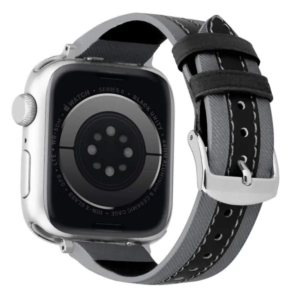
Leather-style straps can use genuine leather, PU synthetic leather or a combination of materials. They may have a stitched edge, a lined underside and a conventional buckle. A composite design can combine a leather outer surface with a different inner material, such as silicone. These are distinct specifications and should be named accurately.
Check both sides of the sample. The outer surface, underside, edge finish, stitching and attachment points should match the approved specification. A leather texture in a photograph does not establish genuine leather, and a leather outer layer does not mean that every layer is leather. Care instructions must match the finished construction.
Lumei product example: leather and silicone watch band. This composite structure should be presented separately from an all-leather strap.
Metal Link and Milanese Mesh Bands
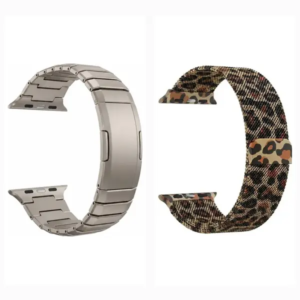
A metal link bracelet uses connected sections that articulate around the wrist. Length adjustment depends on its design and can involve removable links or a dedicated adjustment mechanism. A Milanese-style band uses a mesh construction, with its own edge finish, fastening and adjustment details.
Compare the clasp, link or mesh joints, surface finish and connector, as well as the stated metal composition. Silver, gold or dark finishes describe appearance, not the underlying alloy. Stainless steel and titanium should only be used as material descriptions when confirmed for the selected product and relevant components.
Mesh bands do not all use the same fastening. Some designs use magnetic closures and others use mechanical hardware. Likewise, a tool-free link adjustment claim must be checked on that particular bracelet; it is not a feature of every metal band.
Lumei product examples: metal link band and Milanese mesh band. Review the selected product specifications and fastening details.
Scrunchie and Elastic Bands
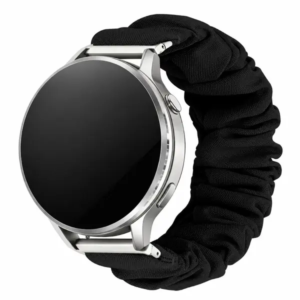
Scrunchie bands use a gathered fabric appearance around the band body. Elastic loop designs can provide a stretch fit without a conventional buckle, but the actual construction and usable wrist range vary. A scrunchie appearance should not automatically be described as nylon, and an elastic band should not be treated as one size for every wrist.
These designs can add a different visual direction to a product range. Check their relaxed dimensions, intended wrist fit, seam finish and connectors. If several sizes are required, define each size clearly in the product list and on its label.
Lumei product example: scrunchie watch band. Choose the connector and fit for the exact intended device.
Quick Comparison of Watch Band Styles
| Style | Construction or feature | Priority sample checks |
|---|---|---|
| Silicone sport | Molded solid or perforated band | Holes, edge finish, closure and connector |
| Nylon woven | Two-piece strap or adjustable loop | Composition, seams, edges and adjustment |
| Leather or PU | Layered strap with specified surface and lining | Material identity, lining, stitching and edges |
| Metal link | Articulated bracelet | Link adjustment, clasp, joints and finish |
| Milanese mesh | Mesh body with a selected fastening | Mesh edges, closure and adjustment |
| Scrunchie or elastic | Gathered fabric or stretch loop | Wrist range, seams, recovery and connector |
These are comparison points, not test results or a universal performance ranking. The finished product, its components and its intended use determine the appropriate checks.
Need help selecting styles for your range? Send your device list, preferred styles and quantities for an assortment review. Lumei can compare available products and suitable customization options for the project.
Watch Band Closures and Adjustment Methods
A closure determines how the band is fastened and adjusted. Specify it independently of the band material. If customers expect a particular way of putting the band on, a visually similar replacement with different hardware may not meet that expectation.
Pin Buckles and Stud Fastenings
A pin buckle uses a pin and adjustment holes. Stud-style fastenings use a different engagement and retention arrangement. Check hole alignment, the usable length range and how the free end is retained. Do not assume that a strap with holes has the same closure as another product.
Hook and Loop and Adjustable Slides
Hook-and-loop fastenings and sliding adjusters appear on selected textile designs. Inspect the attachment area, seam quality and usable adjustment range. Test the closure on the finished sample, including how the band is opened and how the excess length sits after adjustment.
Folding Clasps and Magnetic Closures
Folding clasps close through a mechanical action. Magnetic closures rely on the selected magnetic fastening design, which may be part of a mesh, textile or other construction. Check engagement, release and retention using the agreed sample procedure. Do not infer fastening strength from appearance or publish a holding-force figure without supporting evidence.
Elastic Loops
An elastic loop has no conventional opening buckle, so fit depends on its dimensions and stretch characteristics. Request the intended wrist range and check whether the product needs multiple sizes. Avoid promising that one loop will fit every customer.
Watch Band Connections and Device Compatibility
Watch band connections need to match the exact device. Some watches use spring bars between lugs, with quick-release versions adding a small release lever. Other devices use a dedicated sliding, locking or adapter-based connection. “Quick release” describes how a connection operates; it is not a guarantee that different connectors are interchangeable.
Record the complete watch model and relevant case size before selecting a band. For a standard lug system, confirm the required width and connection details. For a dedicated system, confirm the appropriate connector and locking geometry. A case-size number is not automatically the band connector width.
Official device guidance is the starting point for selecting the corresponding interface. The supplied band must still be checked on the exact device or an appropriate fixture. Apple’s band-change guidance, for example, requires compatible case sizing and a properly locked connection [1]. This general principle does not establish a compatibility claim for every third-party band.
For Apple Watch, Samsung Galaxy Watch, Google Pixel Watch, Garmin and WHOOP projects, send the exact model rather than only the brand. Lumei can use the device details and connector reference to help identify the appropriate product. A list of supported brands is not a universal interchangeability table.
How to Build a Watch Band Product Range
Start with the buyers and devices you intend to serve. A broad list of materials can still leave important gaps if it lacks the required connector, wrist range or closure. Build the device and size list first, then compare styles within those requirements.
Silicone, nylon, leather and metal can form the main groups in a range. Within each group, choose a limited set of constructions and existing colors that you can describe and label clearly. Add decorative or specialist styles when they serve an identified audience rather than increasing the number of combinations without a reason.
| Buyer requirement | Products to compare | Detail to confirm |
|---|---|---|
| Sport-oriented appearance | Solid or perforated silicone; selected textile styles | Actual intended use and closure operation |
| Adjustable textile style | Nylon two-piece or loop designs | Composition, adjustment range and edges |
| Leather-style appearance | Genuine leather, PU or accurately labeled composites | Outer material and lining specification |
| Metal bracelet appearance | Link or Milanese mesh designs | Composition, finish, clasp and length adjustment |
| Decorative stretch style | Scrunchie or elastic products | Wrist range and connector version |
This is a purchasing example, not a sales forecast or a claim about which products sell best. Confirm demand with your own customers, then review the assortment before expanding colors and device versions.
Define an SKU as the specific sellable combination in the order, including style, color and connector version, plus length where relevant. Selected in-stock Lumei bands start from 10 units per SKU. Total order requirements and the availability of a mixed assortment are confirmed during quotation. A stock SKU minimum does not set the MOQ for logos, custom colors or packaging.
What to Confirm Before Requesting Samples
Request a sample of the exact construction and connector you plan to order. If the project includes a logo or packaging, identify whether the sample is a stock reference or a finished custom sample. Compare the sample with the agreed specification before approving bulk production.
- Device and fit: complete device model, connector version, relevant case size or lug width, and required wrist range.
- Product identity: material specification, construction, existing color and selected closure.
- Appearance and workmanship: edges, seams, surface finish, logo position and visible defects relevant to that style.
- Order structure: quantity for each style, color and connector combination, with any separate packaging requirements.
- Approval: sample photos or video, any required physical sample, and the agreed acceptance reference for production.
For Lumei projects, in-stock samples are charged at the applicable product price, with shipping charged separately. Ordinary custom samples generally take 7–10 days and carry a sampling charge. The current watch band policy does not credit that charge against a later bulk order. Requirements involving new colors, tooling or other development need their own schedule.
Agree the required checks with the supplier before production. Routine appearance and function checks serve a different purpose from laboratory testing. If your project requires formal evidence, specify the test method, conditions, product coverage and acceptance criteria before approving the order.
Frequently Asked Questions
What are the main types of watch bands
Common groups include silicone sport bands, nylon woven bands and loops, leather and PU straps, metal link bracelets, Milanese mesh bands, and scrunchie or elastic styles. Describe the closure and connector separately so each product can be identified accurately.
Are watch bands and watch straps the same thing
The terms often overlap in everyday use. Buyers may use “strap” for flexible designs and “bracelet” for metal links, but terminology alone is not a reliable specification. Confirm the construction, material and device connection.
Is a magnetic band a separate material
No. Magnetic describes a fastening feature. The band body may use a metal mesh or another material, depending on the product. Confirm the actual material and closure structure separately.
Are all woven watch bands nylon
No. Woven describes the construction, and the fibers can vary. Use the stated composition for the selected product instead of identifying the material from its appearance.
Are Milanese bands the same as metal link bracelets
No. Milanese-style bands use mesh, while link bracelets use connected sections. Their closures, edge finish and adjustment methods should be compared on the actual products.
Can one band fit every smartwatch brand
No. Confirm the exact device, connector and relevant size. Matching color or apparent strap width does not prove that two dedicated connection systems are compatible.
Which watch band type is best for a retail range
The useful choice depends on your device coverage, customer preferences, intended use and fit requirements. Compare finished samples across the main materials and structures rather than selecting one type as universally best.
Can Lumei supply stock and branded watch bands
Yes. Lumei supplies available watch bands and coordinates suitable customization with specialized manufacturing partners. Logo methods and minimum quantities depend on the selected material, style, connector and project. Available nylon branding routes include woven-in logos or separate fabric labels, rather than direct band-body printing.
Plan Your Watch Band Assortment
Lumei is a wholesale supplier working with specialized manufacturing partners. We help buyers compare silicone, nylon, leather and metal watch band options and coordinate suitable branding, packaging and shipping requirements. Selection begins with the exact device and finished product specification.
Send your device models, preferred styles or product references, colors, quantities and packaging needs. If you need branding, include the artwork and intended position. We can review the available options and prepare a project-specific quotation without a public price list.